
Hair removal guide

Electrolysis vs Laser for Grey Hair

Electrolysis vs laser for grey hair comes down to one thing: pigment. Laser needs colour in the hair to work. Electrolysis treats each follicle directly, so grey, white and blonde hair can be treated.

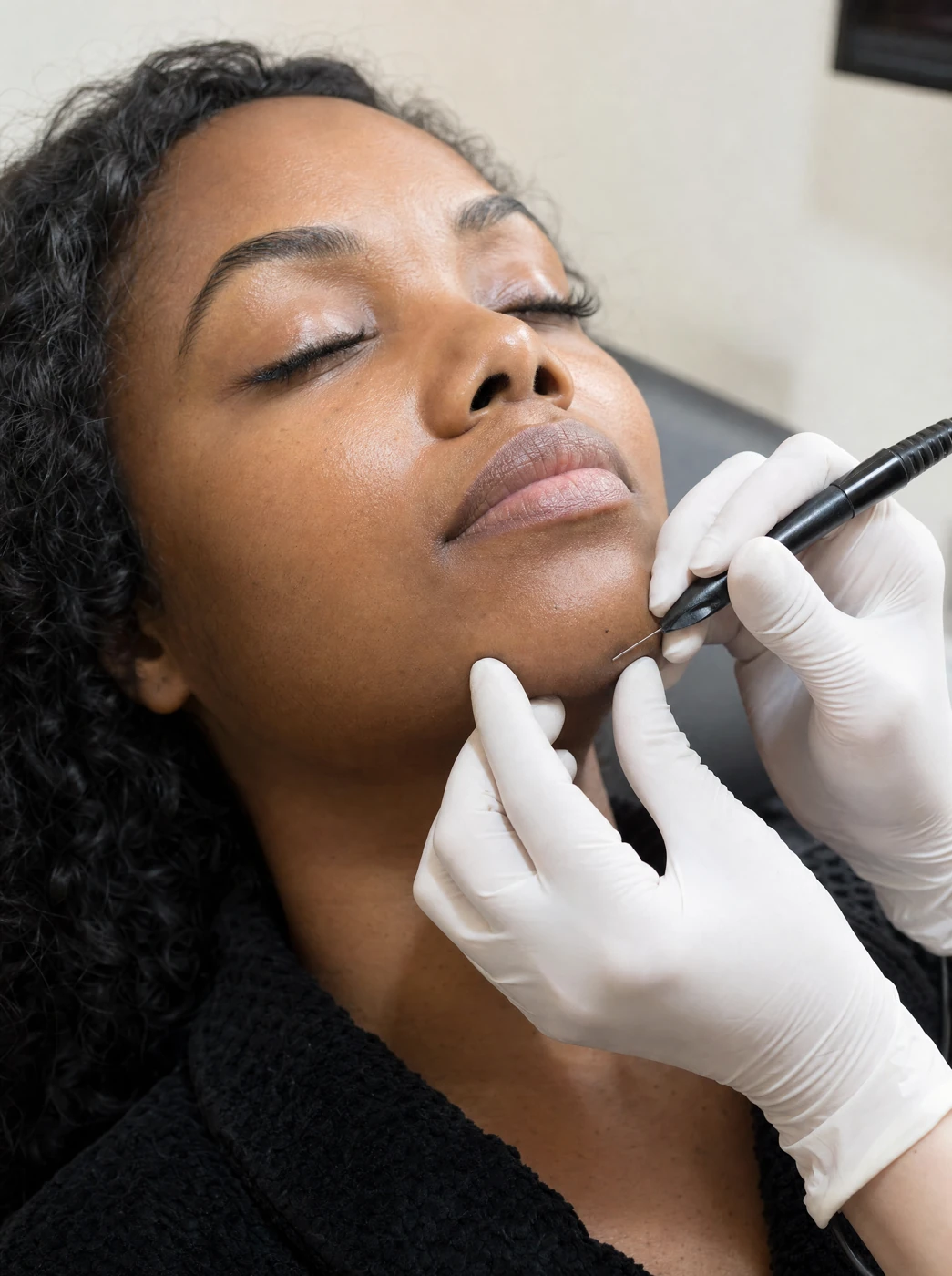
Electrolysis vs laser for grey hair: illustration of electrolysis on a woman's chinTreatment illustration

The short answer

Why laser struggles with grey and white hair

Laser hair removal works by heating the pigment in the hair. Grey and white hair has little or no pigment, so the laser has nothing to target. Electrolysis uses a fine probe and a small current in each follicle, so hair colour does not matter.

That is why a laser that once worked can stop working as hair turns grey. The grey hairs are simply invisible to it.

How it works

How electrolysis treats hair of any colour

Electrolysis treats one hair at a time. A fine sterile probe goes into the follicle and a precise current disables it at the source, so it works on grey, white, blonde, red and dark hair.

Many women first notice coarse hair on the chin as hormones change around perimenopause and menopause, often at the same age the hair turns grey. Hair grows in cycles, so treatment runs as a series of sessions.

Side by side

Electrolysis vs laser: a side-by-side comparison

General information only. Your own suitability is checked at the patch test.

Electrolysis compared with laser hair removal
 LaserElectrolysis
How it worksLight heats the pigment in the hairA fine probe and a small current in each follicle
Grey and white hairLittle or no effectTreats it
Blonde and red hairOften weakTreats it
Dark hairTreats itTreats it
Best suited toLarge areas such as legs and underarmsSmall areas such as the chin, upper lip and brows
How it is describedHair reductionTreated follicles stop growing hair

Dark and grey together

When to use laser first and electrolysis after

If you have a mix of dark and grey hair, the two methods can work together. Laser can reduce the dark hair across a larger area. Electrolysis then treats the grey and light hairs the laser leaves behind.

If most of your hair is already grey, or the area is small, electrolysis on its own is usually the simpler route.

Read about electrolysis at WOB Beauty

About this guide

How this guide was written

Written from Bola's own treatment practice at the Fleet Street clinic. It is general information, not a diagnosis. Whether electrolysis suits you, and how many sessions you may need, is confirmed after a patch test.

Quick answers

Frequently asked questions

Does laser hair removal work on grey hair?

Rarely. Laser targets the pigment in the hair. Grey and white hair has little or no pigment, so the laser has nothing to absorb its light and the hair is left behind.

Does electrolysis work on grey hair?

Yes. Electrolysis treats each follicle with a fine probe and a small current, so it does not rely on hair colour. It treats grey, white, blonde, red and dark hair.

How many electrolysis sessions will I need?

Hair grows in cycles, so a series of sessions is normally needed. The number depends on the area, hair density and your growth cycle, and Bola reviews it as treatment goes on.

Your first appointment

Start with a patch test

Book the electrolysis patch test, or send Bola a photo of the area on WhatsApp and ask anything first.

7 Hind Court, 147 Fleet Street
London EC4A 2BU

Monday to Saturday, 10am to 7pm
Closed Sunday

Get directions
WhatsApp